
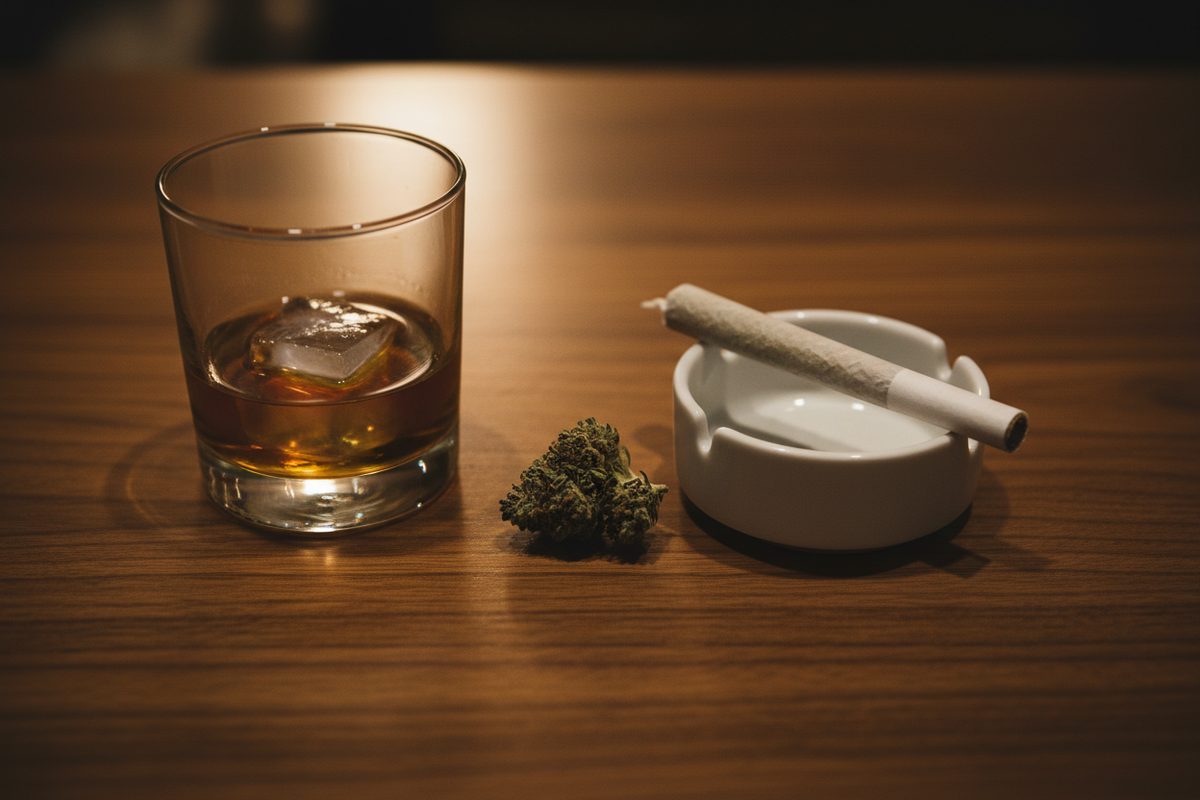
Alcohol is legal, culturally normalized, and consumed by roughly 133 million Americans. Cannabis remains a Schedule I controlled substance under federal law, classified alongside heroin as having "no accepted medical use and high potential for abuse." Yet the comparative safety data between these two substances tells a very different story than their legal classifications would suggest.
This page presents that data. The goal is not to advocate for cannabis or against alcohol. It is to provide adults with an honest, proportional comparison so they can assess relative risk for themselves.
Mortality
Excessive alcohol use is a leading cause of preventable death in the United States, responsible for approximately 140,000 deaths per year, making it the third leading preventable cause of death in the country.
CDC / National Institute on Alcohol Abuse and Alcoholism (NIAAA)
To put that in perspective: alcohol kills more Americans annually than drug overdoses from any single illicit substance. It kills more Americans than car accidents. It kills roughly the same number of people as stroke.
Globally, the numbers are even more sobering. The World Health Organization estimates that alcohol causes approximately 3 million deaths per year worldwide — accounting for 5.3% of all deaths. That includes deaths from alcohol-related cancers, liver disease, cardiovascular disease, injuries, and violence.
Cannabis, by comparison, has zero confirmed fatal overdoses in recorded medical history. Not zero this year, or zero in a given study — zero ever. No medical examiner has attributed a death solely to cannabis toxicity. This is not because cannabis is harmless (it is not), but because its pharmacological safety margin is extraordinarily wide — the amount needed to reach a lethal dose is practically unachievable through normal consumption.
Addiction and Dependence
An estimated 28.6 million adults ages 18 and older (10.6% of this age group) had alcohol use disorder (AUD) in the past year.
National Institute on Alcohol Abuse and Alcoholism (NIAAA), 2023 National Survey on Drug Use and Health
Alcohol use disorder affects an estimated 14.5 million Americans aged 12 and older in any given year, with broader survey data placing the number among adults even higher. It is one of the most common substance use disorders in the country.
Cannabis can also be addictive. A 2025 JAMA review found that approximately 3 in 10 people who use cannabis may develop cannabis use disorder (CUD). This is a real condition that should be taken seriously. However, the nature and severity of the two dependencies are fundamentally different.
Physical Dependence: A Critical Distinction
Alcohol creates severe physical dependence. When a person who is physically dependent on alcohol stops drinking abruptly, they can experience delirium tremens — a condition involving seizures, hallucinations, dangerous spikes in heart rate and blood pressure, and potentially death. Alcohol withdrawal is a medical emergency that can be fatal without treatment.
Cannabis withdrawal, while genuinely uncomfortable, is not life-threatening. Symptoms may include irritability, insomnia, decreased appetite, anxiety, and restlessness. These symptoms are real and can significantly affect quality of life, but they do not carry the risk of seizures, organ failure, or death.
Organ Damage
The contrast in organ damage profiles between alcohol and cannabis is stark.
Alcohol's Impact on the Body
Alcohol is toxic to virtually every organ system in the body. With chronic heavy use, it causes:
- Liver disease. Fatty liver, alcoholic hepatitis, cirrhosis. Alcohol-related liver disease is a leading cause of liver transplantation.
- Cancer. Alcohol is classified as a Group 1 carcinogen by the International Agency for Research on Cancer (IARC) — the highest classification, meaning there is sufficient evidence that it causes cancer in humans. Alcohol is directly linked to cancers of the liver, breast, colon, rectum, esophagus, and head and neck. There is no "safe" level of alcohol consumption with respect to cancer risk.
- Brain damage. Chronic alcohol use causes structural brain changes, cognitive impairment, and can lead to Wernicke-Korsakoff syndrome, a form of permanent brain damage.
- Heart disease. Chronic heavy drinking causes alcoholic cardiomyopathy (weakening of the heart muscle), arrhythmias, high blood pressure, and increases stroke risk.
- Pancreatitis. Both acute and chronic pancreatitis are strongly associated with alcohol use.
- Immune system suppression. Chronic alcohol use weakens the immune system, increasing susceptibility to infections including pneumonia and tuberculosis.
- Gastrointestinal damage. Gastritis, ulcers, and increased intestinal permeability.
Alcohol is causally linked to more than 200 disease and injury conditions, including liver cirrhosis, cancers, and cardiovascular diseases.
World Health Organization — Global Status Report on Alcohol and Health
Cannabis's Impact on the Body
Cannabis does not have an equivalent organ destruction profile. There is no cannabis equivalent to cirrhosis. There is no cannabis equivalent to alcoholic cardiomyopathy. Cannabis is not classified as a carcinogen by IARC.
That said, cannabis is not without physical risks:
- Lung health. Smoking cannabis produces many of the same respiratory irritants as tobacco smoke. Chronic smoking can cause bronchitis and airway inflammation. However, the link between cannabis smoking and lung cancer has not been established with the same certainty as tobacco, and alternatives to smoking (vaporizers, edibles, tinctures) eliminate inhalation risks entirely.
- Cardiovascular concerns. Cannabis use can temporarily increase heart rate and may pose risks for individuals with existing cardiovascular conditions. Daily, high-potency use has been associated with elevated risks of coronary heart disease.
- Brain development. Regular cannabis use before age 25 may affect brain development, which is why this site is exclusively for adults aged 21 and older.
Impairment, Violence, and Social Harm
Both Impair Driving
This should be stated clearly: both alcohol and cannabis impair driving ability, and neither should be used before driving. THC roughly doubles crash risk, while alcohol at the legal limit of 0.08% BAC increases crash risk by approximately 4 to 7 times. At higher blood alcohol levels, the risk multiplies dramatically. For a detailed discussion, see our Driving & Impairment page.
Violence
About 40% of state prisoners and 32% of federal prisoners who committed violent offenses reported they were under the influence of alcohol at the time of the offense.
Bureau of Justice Statistics — Alcohol and Crime
Alcohol is strongly associated with violence. Roughly 40% of violent crimes are committed by individuals who were drinking at the time. Alcohol is implicated in a significant proportion of domestic violence, sexual assault, and homicide cases. It lowers inhibitions, impairs judgment, and increases aggression in many users.
Cannabis is not associated with increased aggression. In fact, some research suggests it may have the opposite effect. While cannabis certainly impairs judgment and should not be used in situations requiring clear thinking, the pharmacological profile of THC does not produce the disinhibition and aggression pattern associated with alcohol.
Social and Economic Cost
Excessive alcohol use cost the United States $249 billion in 2010, or $2.05 per drink. Most of these costs were due to binge drinking and were borne by governments.
CDC — Excessive Alcohol Use
Alcohol costs the US economy an estimated $249 billion annually, driven by healthcare expenses, lost workplace productivity, law enforcement, and criminal justice system costs. This figure does not account for the incalculable personal costs — destroyed families, traumatized children of alcoholic parents, lives lost to drunk driving.
Cannabis-related social costs are significantly lower by every available measure, though they are not zero. Costs associated with cannabis include impaired driving incidents, treatment for cannabis use disorder, and productivity effects. However, no credible estimate places cannabis social costs in the same order of magnitude as alcohol.
Comparison Table
| Category | Alcohol | Cannabis |
|---|---|---|
| Annual US Deaths | ~140,000 | 0 confirmed fatal overdoses |
| Fatal Overdose Possible? | Yes — alcohol poisoning kills ~2,200/year in the US | No — no confirmed case in medical history |
| Addiction Rate | ~15% of lifetime users develop dependence | ~9% of lifetime users develop dependence |
| Physical Dependence | Severe — creates profound physical dependence | Mild — primarily psychological dependence |
| Withdrawal Can Be Fatal? | Yes — delirium tremens can kill | No — uncomfortable but not life-threatening |
| Organ Damage | Extensive — liver, brain, heart, pancreas, GI tract | Limited — lung irritation from smoking (avoidable with alternatives) |
| Cancer Risk | IARC Group 1 carcinogen — causes at least 7 types of cancer | Not classified as a carcinogen by IARC |
| Violence Association | Strong — involved in ~40% of violent crimes | Not associated with increased aggression |
| Annual US Social Cost | ~$249 billion | Significantly lower by all available estimates |
| Federal Legal Status | Legal (regulated) | Schedule I (most restrictive classification) |
An Important Note on Proportional Risk
The data above is not presented to argue that cannabis is "safe" in absolute terms. Cannabis carries real risks that this site covers thoroughly:
- Cannabis use disorder affects a meaningful percentage of users and can significantly impact quality of life.
- Cannabis impairs driving and contributes to motor vehicle crashes.
- Mental health effects include potential worsening of anxiety at high doses and increased psychosis risk in vulnerable individuals.
- Regular use before age 25 may affect brain development.
- Cardiovascular risks exist, particularly with daily, high-potency use.
The point of this comparison is not "cannabis good, alcohol bad." It is that the relative risk profiles of these two substances are dramatically different, and those differences are not reflected in how our society regulates, discusses, or perceives them.
A substance that kills 140,000 Americans per year, causes cancer, destroys livers, fuels violence, and creates physically dangerous withdrawal is available at every grocery store and gas station in America. A substance with zero confirmed fatal overdoses, no established carcinogenicity, no association with violence, and non-lethal withdrawal is classified by the federal government as more dangerous than cocaine or methamphetamine.
Adults deserve to know these facts so they can form their own conclusions.
Further Reading
Related Pages on TryCannabis.org
- Cannabis vs. Other Substances — how cannabis compares to opioids, tobacco, cocaine, and more
- The Gateway Drug Myth — what the evidence actually says
- Cannabis Use Disorder — recognizing and addressing problematic use
- Driving & Impairment — why impaired driving is never acceptable with any substance
- Responsible Recreational Use — guidelines for reducing risk