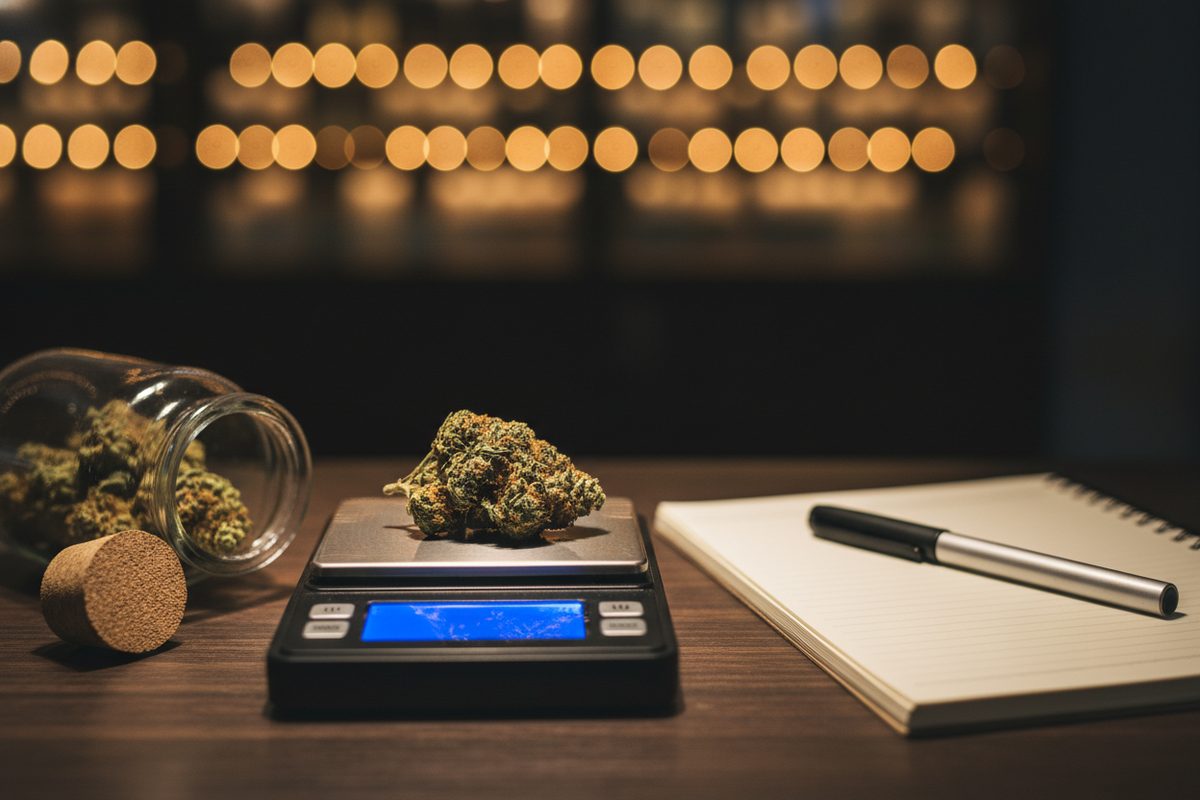
If there is one piece of advice that every cannabis professional, researcher, and experienced patient agrees on, it is this: start with the lowest possible dose and increase gradually. This is not a suggestion — it is the foundation of safe, effective medicinal cannabis use.
Unlike most pharmaceuticals, where a doctor prescribes a specific dose based on clinical guidelines, cannabis dosing is deeply personal. Your ideal dose depends on your body weight, metabolism, tolerance, the specific product, your endocannabinoid system, and what you are trying to treat. Two people can take the exact same product at the exact same dose and have very different experiences.
That is why learning to dose properly is arguably the most important skill you will develop as a medicinal cannabis user.
The Golden Rule: Start Low, Go Slow

"Start low, go slow" means exactly what it sounds like. You begin with a very small amount of cannabis — often far less than what you might think would be effective — and you wait. You observe how your body responds. If the effects are insufficient, you increase slightly at your next session, not during the same one.
This approach matters for several reasons:
- Everyone's endocannabinoid system is different. Your CB1 and CB2 receptor density, your natural endocannabinoid production, and your liver metabolism all affect how you process cannabis. What works for a friend may overwhelm you, or vice versa.
- Overconsumption is uncomfortable. While a cannabis overdose is not fatal, taking too much THC can cause intense anxiety, paranoia, rapid heart rate, nausea, and disorientation — experiences that can be deeply unpleasant and may discourage you from trying again.
- You cannot "un-dose." Once you have consumed cannabis, you cannot take it back. With edibles, you may be in for several hours of unwanted effects if you have taken too much. Starting small gives you control.
- The biphasic effect means more can be worse. As we will explain below, higher doses of THC can actually produce the opposite of the effect you are seeking.
The Biphasic Effect: Why More Is Not Better
This is perhaps the most important concept for any new medicinal cannabis user to understand. Cannabis exhibits what scientists call a biphasic effect, meaning that low doses and high doses can produce opposite results. This has been demonstrated in both animal and human studies.
The 5-Milligram Study
The most well-documented example involves anxiety. A human study administered either a placebo, a low dose (7.5 mg), or a moderate dose (12.5 mg) of THC to 42 participants before stress-inducing tests. The results were striking:
- Those who took the low dose (7.5 mg) reported lower anxiety than the placebo group.
- Those who took the moderate dose (12.5 mg) experienced increased anxiety.
Research published in <em>Neuropsychopharmacology</em> identified the molecular mechanism: at low doses, cannabinoids activate CB1 receptors on glutamatergic (excitatory) neurons, producing an anxiolytic (anti-anxiety) effect. At high doses, they activate CB1 receptors on GABAergic (inhibitory) neurons, producing an anxiogenic (anxiety-producing) effect.
Biphasic Effects of Cannabinoids in Anxiety Responses — PMC, 2012
The Biphasic Effect Goes Beyond Anxiety
The biphasic pattern has been observed across multiple areas:
- Pain: Low-dose CBD increased pain threshold in some studies, while higher doses actually decreased it.
- Nausea: Low-dose THC is a well-established anti-nausea treatment, but very high doses can trigger cannabinoid hyperemesis syndrome (cyclical vomiting).
- Sleep: Low-dose CBD can increase alertness, while higher doses (50+ mg) may promote sedation.
- Appetite: THC is known for stimulating appetite, but the relationship is dose-dependent and can vary.
- Memory: Low doses may have minimal impact on cognition, while high doses can impair short-term memory significantly.
A comprehensive review in <em>Pain Medicine</em> confirmed that biphasic dose-response curves are a consistent feature of cannabinoid pharmacology, reinforcing the principle that optimal therapeutic benefit is found at lower doses for many conditions.
Biphasic effects of cannabis and cannabinoid therapy — Oxford Academic/Pain Medicine, 2024
The takeaway: There is an optimal dose for you — a sweet spot where benefits are maximized and side effects are minimized. Finding that dose requires patience and gradual experimentation, not guesswork.
Recommended Starting Doses by Method
Different consumption methods have different onset times, durations, and dosing considerations. Here are the generally recommended starting points for each method.
Edibles and Capsules
| Experience Level | Starting THC Dose | Notes |
|---|---|---|
| True beginner (never used cannabis) | 1 to 2.5 mg | You may feel little or nothing — that is okay and expected |
| Some prior experience (first time with edibles) | 2.5 to 5 mg | Edibles hit differently than inhalation, even if you have smoked before |
| Experienced user | 5 to 15 mg | Adjust based on personal tolerance and product potency |
Tinctures (Sublingual)
- Start with 1 to 2.5 mg THC (often just 1 to 2 drops, depending on concentration)
- Hold under the tongue for 60 to 90 seconds before swallowing
- Wait 45 minutes to assess effects
- Add one drop at a time if needed (this gradual increase is called titration)
Tinctures offer some of the best dose control of any consumption method, which is why many clinicians recommend them as a starting point for medicinal users. The sublingual absorption means faster onset than edibles (typically 15 to 45 minutes) with a more predictable experience.
Inhalation (Smoking or Vaporizing)
- Take one small, 3-second inhale
- Wait 10 to 15 minutes before taking another
- For a complete beginner, one puff may be sufficient for the entire session
Inhalation offers the fastest onset (1 to 5 minutes) and the shortest duration (1 to 3 hours), which makes it easier to self-titrate in real time. However, precise dosing is more difficult because the amount of THC in each puff varies based on the product, your inhale depth, and how long you hold the vapor or smoke.
Quick-Reference Dosing Chart
| Method | Beginner Dose | Onset Time | Duration | Wait Before Redosing |
|---|---|---|---|---|
| Edibles / Capsules | 1 to 2.5 mg THC | 30 min to 2 hours | 4 to 8 hours | 2 hours minimum |
| Tinctures (sublingual) | 1 to 2.5 mg THC | 15 to 45 minutes | 3 to 6 hours | 45 minutes |
| Inhalation | 1 small puff (3 sec) | 1 to 5 minutes | 1 to 3 hours | 10 to 15 minutes |
| Topicals | Apply to small area | 15 to 45 minutes | 2 to 4 hours | As needed |
Microdosing: Less Than You Think
Microdosing is the practice of taking very small amounts of cannabis — typically 1 to 5 mg of THC — to achieve therapeutic benefits without noticeable impairment or a significant "high." It has gained increasing attention in the medicinal cannabis community as a way to manage conditions like anxiety, chronic pain, and inflammation while remaining fully functional.
What Counts as a Microdose?
- Range: 1 to 5 mg THC (sub-psychoactive to barely psychoactive)
- Typical starting microdose: 1 to 2.5 mg THC
- Goal: Therapeutic benefit without noticeable impairment — you should be able to work, drive, and go about your day normally
Dr. Dustin Sulak's Approach
Dr. Dustin Sulak, a leading cannabis clinician and integrative medicine physician, has been one of the most prominent advocates for microdosing. His protocol suggests:
- Start at 1 mg THC combined with 1 mg CBD for true beginners
- Maintain that dose for three full days before making any changes — this gives your endocannabinoid system time to respond
- Increase by 1 mg if you feel no benefit after three days
- Repeat the three-day hold at each new dose level
- Stop increasing when you notice benefit — that is your minimum effective dose
Many patients following this approach discover that their optimal dose is far lower than what they would have taken without structured guidance. Some find relief at just 2 to 3 mg of THC — a dose that would barely register on most product labels.
The microdosing approach is gaining recognition among cannabis clinicians. Dr. Sulak's protocol emphasizes that "the goal is to use the least amount of cannabis to get the most benefit," and that many patients are surprised to find their optimal dose is much lower than expected.
Leafly — Microdosing cannabis: benefits without the buzz
Who Microdosing May Suit
- People who need to remain functional throughout the day (work, caregiving, driving)
- Those who are sensitive to THC or have had negative experiences with higher doses
- Individuals managing anxiety, where low doses may be calming but higher doses counterproductive
- Older adults or anyone new to cannabis who wants a cautious approach
- People looking to reduce reliance on over-the-counter pain medications for mild to moderate chronic pain
THC:CBD Ratios: Tailoring Your Experience
Many medicinal cannabis products are labeled with a THC:CBD ratio, and understanding these ratios can help you choose products that match your needs. The two primary cannabinoids — THC and CBD — interact differently with your body, and their balance significantly shapes the experience.
| Ratio | Psychoactivity | Characteristics | Common Uses |
|---|---|---|---|
| 1:1 (Equal THC:CBD) | Mild to moderate | CBD moderates some of THC's psychoactive effects; reduced risk of anxiety or paranoia | Often recommended as a starting point for medicinal users; pain, anxiety, general wellness |
| 2:1 or higher (THC-dominant) | Moderate to strong | Stronger psychoactive effects; more noticeable "high" | Severe pain, nausea, appetite stimulation, conditions where THC's effects are desired |
| 1:2 or higher (CBD-dominant) | Minimal | Very little psychoactive effect; the small amount of THC may enhance CBD's effects through the entourage effect | Anxiety, inflammation, daytime use where impairment is undesirable |
| CBD-only (0:1) | None | No psychoactive effects; no "high" whatsoever | Epilepsy (Epidiolex), general wellness; note that recent research has questioned CBD's effectiveness for pain when used alone |
A Note on CBD-Only Products
CBD-only products are widely marketed for pain relief and anxiety, but it is important to be honest about what the research says. A 2025 OHSU meta-analysis found that CBD-only products showed almost no improvement in pain management, contrary to popular belief. This does not mean CBD is useless — it has strong evidence for epilepsy and may help with certain types of anxiety — but if pain is your primary concern, a product containing some THC (even at a low ratio) may be more effective.
For a deeper dive into how these compounds work, visit our Cannabinoids & Terpenes guide.
Tolerance: What Happens Over Time
If you use cannabis regularly, your body will gradually adapt. This is called tolerance, and it is a normal biological process — not a sign that something is wrong.
How Tolerance Develops
When your CB1 receptors are repeatedly activated by THC, your body responds by reducing the number of available receptors (a process called downregulation) and making the remaining receptors less sensitive. The result: you need more THC to achieve the same effect you once got from a smaller amount.
Tolerance typically develops:
- Fastest with daily, high-dose use
- Slower with occasional use or microdosing
- Unevenly across different effects — you may develop tolerance to the "high" faster than to pain relief or sleep benefits
Tolerance Breaks (T-Breaks)
A tolerance break is a period of abstaining from cannabis to allow your CB1 receptors to return to their baseline state. Research suggests this process begins within days and is largely complete within 2 to 4 weeks.
- Short break (2 to 3 days): Can provide a noticeable reset, especially for light users
- Moderate break (1 to 2 weeks): Significant receptor recovery for most regular users
- Full reset (3 to 4 weeks): CB1 receptor density typically returns to baseline levels
Tips for a successful tolerance break:
- Plan ahead. Choose a period when you do not have high-stress obligations if possible.
- Expect mild withdrawal. Some regular users experience irritability, difficulty sleeping, reduced appetite, or vivid dreams for the first few days. These are temporary and not dangerous.
- Stay hydrated and active. Exercise and water help your body readjust.
- When you resume, start low again. Your tolerance will be reduced, so your previous dose may now be too much. Treat yourself as a near-beginner.
Alternatives to a Full Break
If stopping completely is not practical (for instance, you rely on cannabis for chronic pain management), consider these strategies:
- Dose reduction: Cut your current dose in half for a week, then gradually find a new minimum effective dose
- Strain rotation: Switch between products with different cannabinoid and terpene profiles so your receptors are not getting the exact same stimulation each time
- Consumption method change: Switching from inhalation to tinctures (or vice versa) can sometimes shift the experience enough to partially reset tolerance
- Scheduled days off: Use cannabis only on certain days of the week rather than daily
Keeping a Cannabis Journal
Tracking your experiences is one of the most effective tools for finding your optimal dose — and it is something that experienced clinicians universally recommend. A cannabis journal transforms your dosing process from guesswork into a data-driven approach.
What to Record for Each Session
| Category | What to Write Down |
|---|---|
| Date and time | When you consumed |
| Product details | Name, type, cannabinoid content (THC %, CBD %), any terpene info available |
| Dose | In milligrams if possible, or number of puffs / drops |
| Method | Edible, tincture, inhalation, topical, etc. |
| Food status | Had you eaten recently? (This affects absorption, especially for edibles) |
| Effects | Physical, mental, and emotional effects — and when they started |
| Duration | How long the effects lasted |
| Side effects | Dry mouth, dizziness, anxiety, fatigue, etc. |
| Overall rating | Helpful / Neutral / Not helpful |
Over time, this journal becomes your personal dosing guide. Patterns will emerge — you will discover which products, doses, and methods work best for your specific needs. It is also an invaluable resource to share with your healthcare provider, giving them concrete data rather than vague descriptions.
For more guidance on tracking, see our Journaling & Tracking Your Experience guide.
Putting It All Together
Finding your ideal cannabis dose is a process, not a one-time event. Here is a practical step-by-step framework:
- Choose your method. If you have never used cannabis, tinctures or low-dose edibles offer the most precise control. Read our Methods of Consumption guide to compare options.
- Start at the lowest recommended dose. For most methods, that means 1 to 2.5 mg THC. If you are particularly cautious, start at 1 mg.
- Consider a 1:1 THC:CBD product. The CBD can help moderate THC's effects and reduce the risk of anxiety.
- Wait the full recommended time before concluding the dose was not enough. Two hours for edibles, 45 minutes for tinctures, 15 minutes for inhalation.
- Record everything in your cannabis journal.
- Increase slowly. Add 1 to 2.5 mg at your next session if you did not achieve the desired effect. Do not double your dose.
- Find your sweet spot and stay there. Once you find a dose that provides benefit without unwanted side effects, resist the temptation to increase "just a little more."
- Monitor for tolerance. If your effective dose starts creeping up over weeks or months, consider a tolerance break or dose reduction.
Both clinical experience and emerging research support the principle that less is often more with medical cannabis. The biphasic dose-response relationship underscores the importance of careful, individualized titration.
The Cannigma — Medical Cannabis: Why Less Is Often More