
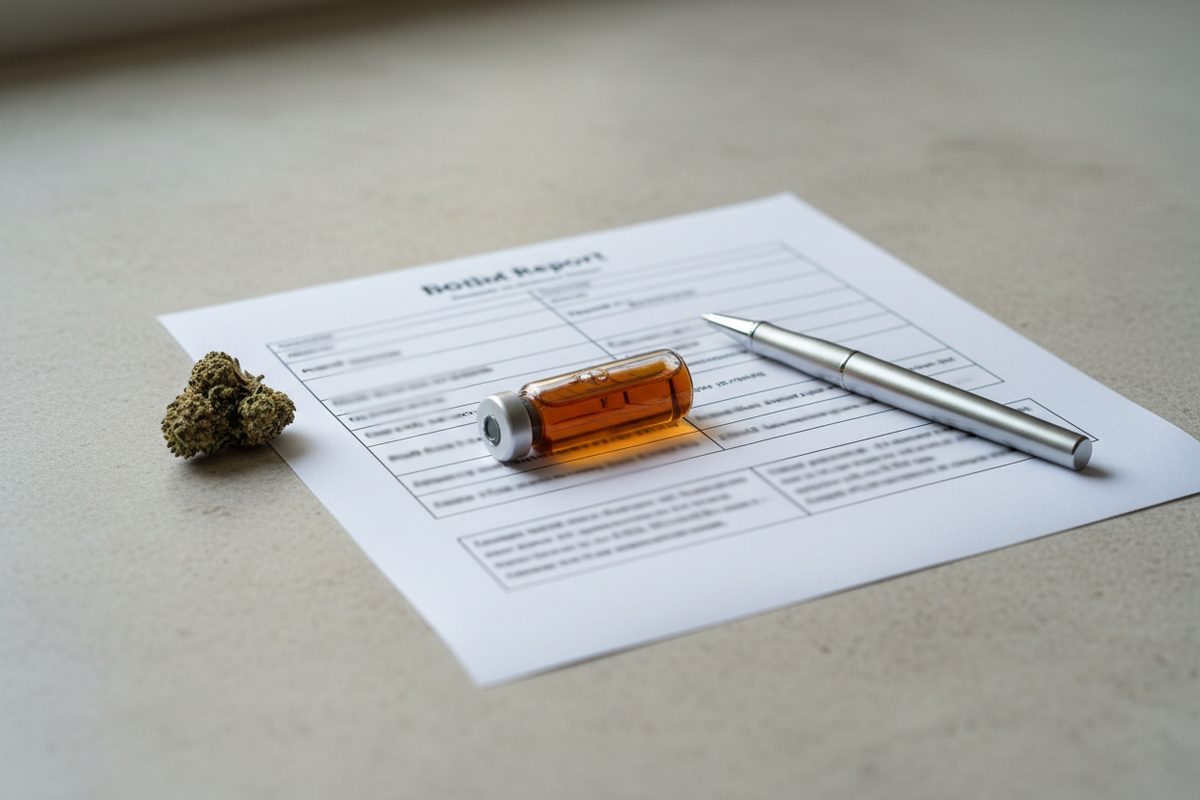
When you purchase a cannabis product from a licensed dispensary, that product should come with lab testing results — a document called a Certificate of Analysis (COA). Think of a COA as a nutritional label, safety inspection report, and quality guarantee rolled into one.
Learning to read a COA is one of the most empowering skills you can develop as a cannabis consumer. It tells you exactly what is in the product you are about to put in your body, and — just as importantly — what is not in it. This guide will walk you through every section of a typical COA so you know what to look for, what it means, and when to be concerned.
What Is a Certificate of Analysis (COA)?
A Certificate of Analysis is a document produced by a testing laboratory that details the chemical composition and safety profile of a specific cannabis product batch. In states with regulated cannabis programs, lab testing is typically required by law before products can be sold to consumers.
A COA generally covers:
- Potency — How much THC, CBD, and other cannabinoids the product contains
- Terpene profile — Which terpenes are present and in what quantities
- Contaminant screening — Tests for pesticides, heavy metals, microbial organisms (mold, bacteria), and residual solvents
- Mycotoxin testing — Screening for toxic compounds produced by certain molds
- Moisture content — Important for flower products to assess shelf stability and mold risk
Understanding Potency Percentages
Potency is usually the first thing people look at on a COA, and it is the most commonly misunderstood. Let's break it down.
What Does "20% THC" Actually Mean?
When a cannabis flower product is labeled as "20% THC," it means that for every gram of flower (1,000 mg), approximately 200 mg is THC. But there is an important nuance here.
Most COAs report two values for each cannabinoid:
- THC (or delta-9-THC): The amount of active, decarboxylated THC already present in the product. In raw flower, this is usually a small number.
- THCA (tetrahydrocannabinolic acid): The raw, non-psychoactive precursor that converts to THC when heated (smoked, vaped, or baked). In raw flower, this is the larger number.
- Total THC: A calculated value representing the maximum THC available if all THCA were converted. The formula is:
Total THC = THC + (THCA × 0.877). The 0.877 factor accounts for the molecular weight lost when THCA loses its carboxyl group during decarboxylation.
The same applies to CBD and CBDA.
Potency for Different Product Types
| Product Type | How Potency Is Expressed | Typical Range | What to Know |
|---|---|---|---|
| Flower | Percentage by weight | 10% to 30% Total THC | Higher percentage does not always mean a "better" product; terpene profile matters too |
| Edibles | Milligrams per serving / per package | 2.5 mg to 100 mg per package | Always check per serving, not per package — a 100 mg package with 10 servings is 10 mg each |
| Tinctures | Milligrams per milliliter (mg/mL) | 10 to 50 mg/mL typical | One dropper is usually 1 mL; calculate your dose accordingly |
| Concentrates | Percentage by weight | 60% to 90%+ Total THC | Extremely potent; not recommended for beginners |
| Topicals | Milligrams per container | Varies widely | Potency is less critical here since topicals generally do not enter the bloodstream |
The Myth of "Higher THC = Better"
One of the most common misconceptions among cannabis consumers is that the highest-THC product is the best product. This is not supported by the evidence. As we explain in our Dosing Fundamentals guide, the biphasic effect means higher THC content can actually produce worse outcomes — more anxiety, more side effects, less therapeutic benefit.
Research and clinical experience increasingly suggest that the terpene profile and the full spectrum of cannabinoids present may matter as much as, or more than, raw THC percentage. A 18% THC flower with a rich terpene profile may provide a more effective and more pleasant experience than a 30% THC flower with a flat terpene profile.
Terpene Profile Section
Not all COAs include a terpene analysis, but the better ones do. Terpenes are aromatic compounds that contribute to the smell, flavor, and — according to the entourage effect theory — the therapeutic properties of cannabis.
A terpene profile will list individual terpenes and their concentrations, typically as a percentage of weight. Common terpenes you will see include:
| Terpene | Aroma | Commonly Associated With |
|---|---|---|
| Myrcene | Earthy, musky, herbal | Sedation, relaxation, pain relief |
| Limonene | Citrus, lemon | Mood elevation, stress relief |
| Linalool | Floral, lavender | Calming, anti-anxiety, sleep support |
| Beta-caryophyllene | Peppery, spicy | Pain relief, anti-inflammation (interacts directly with CB2 receptors) |
| Pinene | Pine, forest | Alertness, memory retention, anti-inflammation |
| Terpinolene | Piney, floral, herbal | Uplifting, energizing |
For a deeper exploration, visit our Cannabinoids & Terpenes guide.
Contaminant Testing: What Should NOT Be in Your Product
This is arguably the most important section of the COA from a safety standpoint. Cannabis is a bioaccumulator, meaning it readily absorbs substances from its growing environment — including things you do not want to inhale or ingest.
Pesticide Testing
Cannabis can be grown with various pesticides, fungicides, and growth regulators. Some of these chemicals are harmless at trace levels; others are genuinely dangerous, especially when heated and inhaled. A COA will test for a panel of specific pesticide compounds and report whether each one passes or fails based on state-mandated limits.
What to look for: Every pesticide tested should show a "Pass" result or indicate "ND" (not detected). Any "Fail" result means the product exceeded the allowable limit for that substance.
Heavy Metal Testing
Cannabis plants can absorb heavy metals from soil and water. The four primary heavy metals tested in cannabis are:
- Lead (Pb) — Neurotoxic, accumulates in the body over time
- Arsenic (As) — Carcinogenic at chronic exposure levels
- Mercury (Hg) — Damaging to the nervous system, kidneys, and immune system
- Cadmium (Cd) — Can cause kidney damage and is a known carcinogen
Results are reported in parts per million (ppm) or parts per billion (ppb), with pass/fail thresholds set by state regulations. All four should show "Pass" or fall below the action limit.
Microbial Testing (Mold, Bacteria, and Yeast)
Cannabis can harbor harmful microorganisms, especially if grown, dried, or stored improperly. This is particularly important for immunocompromised patients, who may use medicinal cannabis but are more vulnerable to infections. Common microbial tests include:
- Total Yeast and Mold Count (TYMC) — Measured in colony-forming units per gram (CFU/g). Elevated counts indicate poor growing or storage conditions.
- Total Aerobic Count (TAC) — A broad measure of total bacterial contamination.
- Specific pathogen testing — Screens for dangerous species including Aspergillus (a mold that can cause serious lung infections), Salmonella, and E. coli.
Mycotoxin Testing
Mycotoxins are toxic compounds produced by certain types of mold. Even if the mold itself has been killed or removed, mycotoxins can persist in the product. The most commonly tested mycotoxins in cannabis are:
- Aflatoxin B1, B2, G1, G2 — Produced by Aspergillus flavus and Aspergillus parasiticus. Aflatoxin B1 is the most potent naturally occurring carcinogen known.
- Ochratoxin A — Produced by Aspergillus and Penicillium species. Toxic to the kidneys.
Results are typically reported in micrograms per kilogram (ppb), and all should be below the state's action level or show "Pass."
Residual Solvent Testing
This applies primarily to concentrates and extracts — products made by dissolving cannabis in a solvent and then removing the solvent. If the solvent is not fully removed (purged) during manufacturing, residual amounts may remain in the final product. Common solvents tested include:
- Butane and propane (used in BHO/PHO extractions)
- Ethanol
- Isopropanol
- Acetone
- Hexane
These solvents can be harmful if inhaled or ingested in significant amounts. All should show "Pass" or "ND" (not detected).
Why Third-Party Testing Matters
You may notice that some COAs come from independent, third-party laboratories, while others may be from labs with closer ties to the producer. This distinction matters.
What "Third-Party" Means
Third-party testing means the lab performing the analysis has no financial relationship with the company that produced the cannabis product. The lab has no incentive to make results look better or worse — they are simply reporting what they find. Most regulated state programs require testing by accredited, independent laboratories.
Why It Matters
- Objectivity: A lab that is paid by the producer but is not beholden to them is more likely to report accurate results, including failures.
- Accreditation: Reputable third-party labs hold ISO 17025 accreditation, the international standard for testing and calibration laboratories. This means their methods, equipment, and quality control have been independently verified.
- Consistency: Accredited labs use validated, standardized methods, meaning their results are reproducible and comparable across products.
- Accountability: In regulated markets, labs that produce fraudulent results can lose their license and face legal consequences.
Anatomy of a COA: Section-by-Section Breakdown
Here is what a typical Certificate of Analysis looks like, section by section. While the exact layout varies by lab, most COAs contain these elements:
1. Header / Lab Information
- Lab name and address — Who performed the testing
- Accreditation numbers — ISO 17025, state license number
- Contact information — So you can verify the COA if needed
2. Sample Information
- Client / Producer name — The company that submitted the product for testing
- Product name — Should match what is on the packaging
- Batch number / Lot number — A unique identifier for the specific production run. This should also appear on your product packaging. If the batch number on the COA does not match the batch number on your product, the COA may not be for that specific product.
- Sample type — Flower, concentrate, edible, tincture, etc.
- Date received / Date tested / Date reported — When the lab received the sample, ran the tests, and issued the report
3. Potency Results
- Individual cannabinoid concentrations — THC, THCA, CBD, CBDA, CBN, CBG, and others, typically in both percentage and mg/g
- Total THC and Total CBD — The calculated totals accounting for decarboxylation
- Total cannabinoids — The sum of all detected cannabinoids
4. Terpene Results (If Included)
- Individual terpene concentrations — Listed by name with percentage or mg/g values
- Total terpenes — The sum of all detected terpenes (typically 1% to 5% for flower)
5. Safety / Contaminant Results
- Pesticide panel — List of compounds tested with pass/fail and detected amounts
- Heavy metals — Lead, arsenic, mercury, cadmium with amounts and pass/fail
- Microbial screening — TYMC, TAC, and specific pathogen results
- Mycotoxins — Aflatoxins and ochratoxin A with amounts and pass/fail
- Residual solvents — (For concentrates/extracts) List of solvents tested with amounts and pass/fail
- Moisture content — (For flower) Percentage of water by weight; typically should be under 15%
6. Overall Status
- Pass / Fail determination — An overall summary of whether the product meets all state-mandated testing requirements
- QA signature — Signed by the lab's quality assurance officer or authorized representative
Red Flags: When to Be Concerned
Not all products — and not all COAs — are created equal. Here are warning signs that should make you think twice before purchasing or consuming a product.
No COA Available
This is the biggest red flag. If a product does not have a COA, or if the retailer cannot provide one when asked, you have no way of verifying what is in the product. In regulated markets, every product sold at a licensed dispensary should have testing results available. If you are purchasing from an unregulated source and there is no COA, you are taking a significant risk.
Suspiciously High Potency Claims
If a flower product claims 35% or higher Total THC, be skeptical. While it is not impossible, it is rare, and the cannabis industry has documented cases of "lab shopping" — producers seeking out labs that consistently return inflated potency numbers. The average high-quality cannabis flower typically falls in the 18% to 28% THC range. Claims significantly above that deserve scrutiny.
No Batch Number or Mismatched Batch Numbers
Every COA should have a batch or lot number that matches the number on your product packaging. If there is no batch number on the COA, or if the number on the COA does not match what is printed on your product, you cannot be sure the test results correspond to what you are actually buying. This is particularly common with products that were tested once and then continue using the same COA for subsequent batches.
Expired or Very Old Testing
Check the testing date on the COA. While there is no universal expiration standard, a COA that is more than a year old should raise questions, especially for flower products that can degrade over time. Potency can decrease and microbial contamination can develop during storage. Some states set specific shelf-life limits for tested products.
Missing Safety Tests
A COA that only shows potency but has no contaminant testing is incomplete. Potency testing tells you how strong a product is; safety testing tells you whether it is safe to consume. Both are essential. A product that only has potency results may be hiding safety failures.
Unaccredited or Unknown Lab
If you cannot find the lab listed on the COA, or if the lab has no ISO 17025 accreditation or state license, the results may not be reliable. Reputable labs are findable, have websites, and display their accreditation credentials.
QR Code That Goes Nowhere
Many products include a QR code on the packaging that is supposed to link to the COA. If that QR code leads to a broken link, a generic website, or a page that does not display actual test results, treat it as a red flag. A legitimate QR code should take you directly to the COA for your specific product batch.
- Does the COA exist and is it accessible?
- Does the batch number match your product?
- Is the testing date recent (within the past year)?
- Is the lab accredited (ISO 17025) and state-licensed?
- Are both potency AND safety tests included?
- Do all contaminant tests show "Pass"?
- Are the potency claims realistic?
How to Access a COA
There are several ways to find the COA for a product you are considering purchasing or have already bought:
- Scan the QR code on the packaging. Many regulated products include a QR code that links directly to the COA for that specific batch.
- Ask at the dispensary. Budtenders should be able to pull up or provide test results for any product they sell. If they cannot, that is worth noting. For tips on navigating your visit, see our What to Expect at a Dispensary guide.
- Check the producer's website. Many cannabis companies publish their COAs online, searchable by batch number.
- Check the lab's website. Some labs maintain public databases where you can look up results by batch number or sample ID.
If you consistently cannot find COAs for products you are considering, it may be worth choosing a different brand or product line that is more transparent about their testing.
Limitations to Be Aware Of
While lab testing is an essential safeguard, it is not perfect. Being aware of its limitations makes you a more informed consumer.
- Testing represents a sample, not the entire batch. Labs test a small portion of a batch, and there can be natural variation within a production run, especially for flower products.
- Potency can vary within the same package. A single jar of flower may have buds with different cannabinoid concentrations. The COA reports the average.
- "Lab shopping" exists. Some producers submit samples to multiple labs and use the results that look best. Regulatory efforts are ongoing to address this, but it remains a known issue in the industry.
- Not all states require the same tests. Testing requirements vary significantly from state to state. A product that passes in one state might not meet another state's standards.
- Testing does not guarantee freshness. A COA tells you what was in the product when it was tested. If the product has been sitting on a shelf for months, potency may have degraded and microbial conditions may have changed.
Despite these limitations, lab-tested products from regulated dispensaries remain far safer and more predictable than untested products from unregulated sources. The COA is not a guarantee of a perfect product, but it is the best quality-assurance tool available to consumers today.
Making It Practical
You do not need to become a chemist to use lab results effectively. Here is a straightforward approach:
- Always check that a COA exists and that the batch number matches your product.
- Look at Total THC and Total CBD to understand potency, and use that information to guide your dosing.
- Scan the safety results for any "Fail" markers — if you see one, do not use that product.
- Check the terpene profile if available, and note which terpenes are dominant. Over time, as you keep a cannabis journal, you may discover that certain terpene profiles work better for you.
- Record the product details and COA information in your cannabis journal so you can reference it later.
Lab results are a tool for making informed choices — not a barrier to entry. Once you get in the habit of glancing at a COA before trying a new product, it becomes second nature. And it is one of the best ways to protect your health while exploring medicinal cannabis.