What Is Cannabis, Exactly?
Cannabis is a flowering plant that has been cultivated by humans for thousands of years. It belongs to the family Cannabaceae and produces a complex mix of chemical compounds — over 500 identified so far — that interact with the human body in ways scientists are still working to fully understand.
The compounds that matter most for medicinal purposes are called cannabinoids. The cannabis plant produces more than 100 unique cannabinoids, but two get the most attention:
- THC (tetrahydrocannabinol) — the primary psychoactive compound, responsible for the "high" associated with cannabis. It is also the compound most associated with medicinal benefits including pain relief, appetite stimulation, and nausea reduction.
- CBD (cannabidiol) — a non-psychoactive compound that has been widely studied for seizure disorders, anxiety, and inflammation. The FDA has approved one CBD medication, Epidiolex, for severe pediatric seizure disorders.
Beyond cannabinoids, cannabis contains aromatic compounds called terpenes that give each variety its distinctive smell and flavor — and may also contribute to its therapeutic effects. You can learn more about these on our Cannabinoids & Terpenes page.
The Plant Itself
Cannabis grows as an annual herbaceous plant, meaning it completes its life cycle in a single growing season. It can reach heights of several feet and produces distinctive fan-shaped leaves that have become one of the most recognizable plant silhouettes in the world.
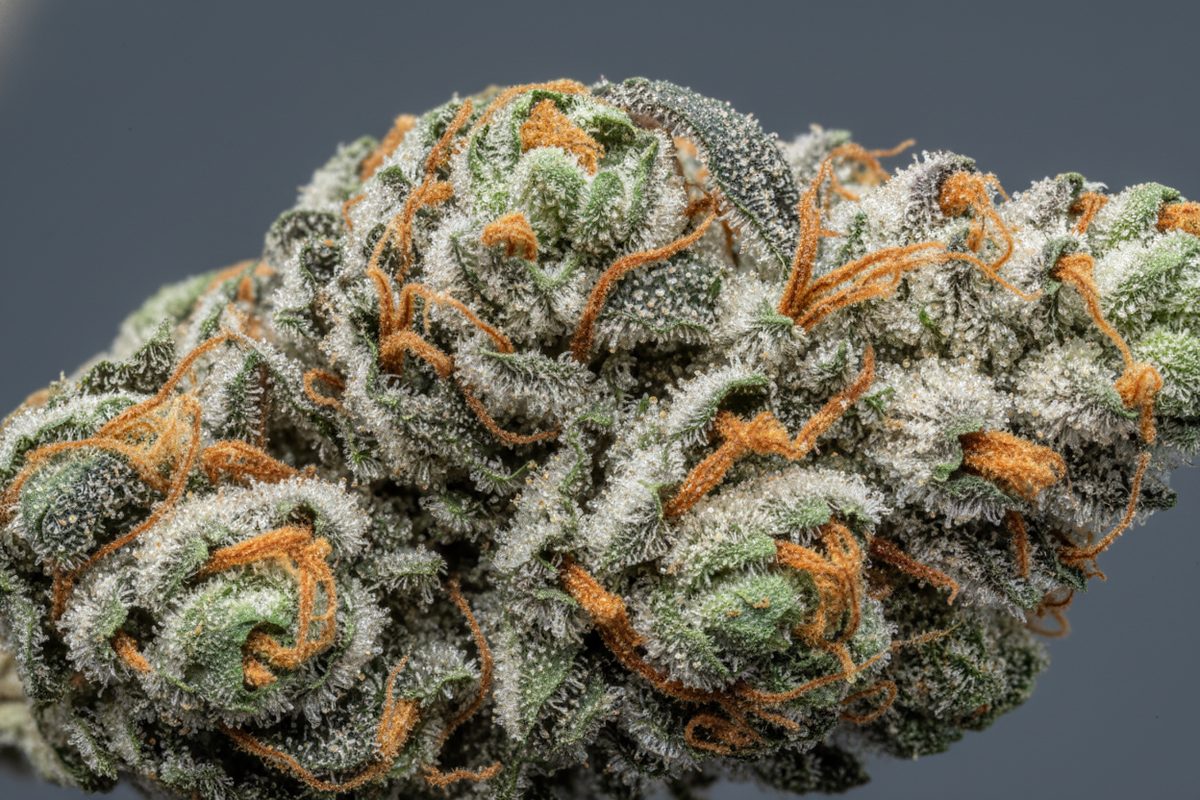
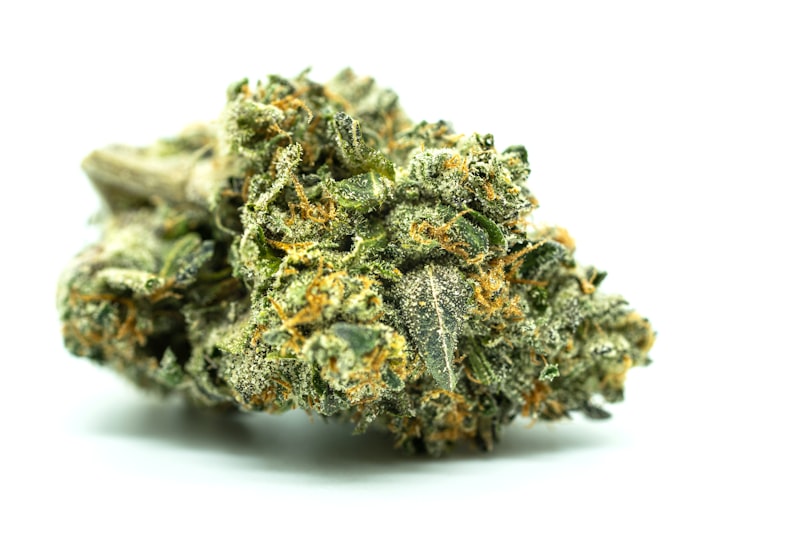
The medicinal compounds are concentrated in the plant's flowers (often called "buds"), particularly in tiny, mushroom-shaped structures called trichomes. These glistening, sticky glands are where the plant produces and stores its cannabinoids and terpenes. When you see the frosty, crystalline coating on high-quality cannabis flower, you are looking at trichomes.
Cannabis plants come in male and female varieties. Only the unpollinated female plants produce the cannabinoid-rich flowers used for medicinal and recreational purposes. Male plants are primarily used for breeding and hemp fiber production.
Cannabis vs. Hemp: What Is the Difference?
Legally speaking, the distinction is simple: hemp is defined as cannabis containing 0.3% THC or less by dry weight. Cannabis (sometimes called "marijuana" in legal contexts) is anything above that threshold. This legal line was drawn by the 2018 Farm Bill, which legalized hemp and hemp-derived products at the federal level.
Biologically, hemp and cannabis are the same species. The difference is in their chemical profiles — hemp has been bred for low THC content (and often higher CBD), while cannabis cultivated for medicinal or recreational use typically has much higher THC concentrations, ranging from about 10% to over 30% in some modern varieties.
A Word About "Indica" and "Sativa"
If you have done any reading about cannabis, you have probably seen strains labeled as "indica" (supposedly relaxing and sedating) or "sativa" (supposedly energizing and uplifting). While these terms are still widely used in dispensaries, modern research suggests this classification is largely outdated and unreliable.
The actual effects of any cannabis product depend on its specific cannabinoid and terpene profile — not on whether it was labeled indica or sativa. A product high in the terpene myrcene is more likely to be sedating regardless of its indica/sativa label, while one rich in limonene is more likely to be uplifting. We cover this in depth on our Cannabinoids & Terpenes page.
A Brief History of Medicinal Cannabis
Humans have been using cannabis as medicine for a very long time — far longer than they have been debating whether it should be legal.
Ancient and Pre-Modern Use
The earliest documented medicinal use of cannabis dates back roughly 5,000 years. Chinese Emperor Shen Nung is traditionally credited with cataloging its therapeutic properties around 2737 BCE, recommending it for conditions including rheumatic pain, malaria, and digestive issues.
Cannabis appears in the medical traditions of many ancient civilizations:
- Ancient Egypt — references to cannabis in the Ebers Papyrus (c. 1550 BCE) describe its use for inflammation
- India — cannabis (called "bhang") has been part of Ayurvedic medicine for millennia, used for pain, insomnia, and appetite stimulation
- Ancient Greece and Rome — physicians documented cannabis for earaches, inflammation, and other ailments
- Medieval Islamic medicine — Arabic physicians described cannabis as an analgesic, anti-inflammatory, and antiepileptic
Western Medicine Discovers Cannabis
Cannabis entered Western medicine in the 1800s, largely through the work of Sir William Brooke O'Shaughnessy, an Irish physician working in India. After observing its traditional use, he conducted experiments and introduced cannabis tinctures to British and American medicine.
By the late 19th century, cannabis preparations were widely available in American and European pharmacies. Major pharmaceutical companies including Eli Lilly, Parke-Davis, and Squibb produced cannabis tinctures and extracts. Between 1840 and 1900, cannabis was one of the most commonly prescribed medicines in the Western world, used for pain, muscle spasms, nausea, and insomnia — many of the same conditions people use it for today.
What Changed?
If cannabis was a mainstream medicine for decades, what happened? The answer involves a combination of politics, economics, and social factors.
Why Cannabis Was Criminalized
The criminalization of cannabis in the United States was not primarily driven by medical science. It was shaped by a mix of social, political, and economic forces in the early 20th century.
The Early 1900s: Shifting Attitudes
Several forces converged in the early decades of the 20th century:
- Immigration and prejudice. As Mexican immigrants came to the United States in increasing numbers following the Mexican Revolution (1910), they brought the practice of smoking cannabis recreationally. Anti-cannabis sentiment became intertwined with anti-immigrant sentiment. The Spanish word "marijuana" was deliberately adopted in English-language media — replacing the more familiar "cannabis" — to associate the plant with Mexican culture and stoke public fear.
- The rise of pharmaceutical regulation. As medicine became more standardized, plant-based medicines with variable potency (cannabis included) fell out of favor compared to synthetic pharmaceuticals with precise, consistent dosing.
- Industrial interests. Some historians point to competition between hemp and newer synthetic materials (nylon, plastics) as a factor, though this is debated.
The Marihuana Tax Act of 1937
The federal government's first major action against cannabis was the Marihuana Tax Act of 1937, championed by Harry Anslinger, the first commissioner of the Federal Bureau of Narcotics. Anslinger used sensationalized claims — and explicitly racist rhetoric — to build public support for the law. The Act did not outright ban cannabis, but imposed such burdensome taxes and regulations that it effectively ended legal use and commerce.
Notably, the American Medical Association opposed the Act, with its legislative counsel testifying before Congress that there was no evidence cannabis was a dangerous drug and that its medicinal value was being dismissed prematurely.
The Controlled Substances Act of 1970
The decisive blow came with the Controlled Substances Act of 1970, signed by President Nixon. Cannabis was placed in Schedule I — the most restrictive category, reserved for substances defined as having "no currently accepted medical use and a high potential for abuse." This is the same category as heroin.
This classification has had enormous consequences. Beyond making cannabis illegal, it made cannabis nearly impossible to research. Researchers needed special federal licenses, were required to use cannabis from limited approved sources, and faced bureaucratic hurdles that did not apply to other substances. This is a key reason why, decades later, the scientific evidence base is still described as insufficient for many conditions — not necessarily because cannabis does not work, but because the research simply has not been done at scale.
The Current Legal Landscape
Cannabis law in the United States exists in a state of contradiction. The plant remains federally illegal, yet the majority of states have legalized it in some form.
Federal Status
As of this writing, cannabis remains a Schedule I substance under federal law. This means:
- It is technically illegal under federal law, even in states where it is legal
- It cannot be transported across state lines, even between two legal states
- Employers can still drug-test for cannabis and make employment decisions based on results
- Federally regulated housing can prohibit cannabis use
- Cannabis businesses have limited access to banking services
- Federal firearm laws prohibit cannabis users from purchasing or possessing firearms
In practice, the federal government has largely deferred to state laws, but this uneasy truce creates genuine legal gray areas for patients.
Rescheduling Update
A federal rescheduling process is actively underway that could move cannabis from Schedule I to Schedule III. In August 2023, HHS recommended the change based on scientific and medical evaluation. The DOJ issued a proposed rule in May 2024, and in December 2025, President Trump signed an executive order directing the attorney general to expedite the process. As of early 2026, the rescheduling process is ongoing. If completed, Schedule III classification would mean less severe federal criminal penalties, the ability for cannabis businesses to deduct expenses on federal taxes, and easier research access — but cannabis would still be federally regulated under the Controlled Substances Act, not legalized. For a detailed timeline, see our Understanding Your State's Laws page.
State-Level Legalization
The landscape at the state level is evolving rapidly. As of early 2026, the majority of U.S. states have legalized cannabis in some form — either for medical use, adult recreational use, or both. However, the specifics vary widely from state to state, including qualifying medical conditions, possession limits, home cultivation rules, and where you can legally consume.
For details on your state's specific laws, visit our Understanding Your State's Laws page.
Medical vs. Recreational: What Is the Difference?
Many states offer both medical cannabis programs and adult-use (recreational) programs. While the plant itself is the same, there are meaningful differences between the two.
| Feature | Medical Program | Recreational / Adult-Use |
|---|---|---|
| Who qualifies | Patients with qualifying conditions and a physician's certification | Any adult 21 or older (in legal states) |
| Physician involvement | Required — a doctor must certify your condition | Not required |
| Product access | Often includes higher-potency products, more formulations, and products designed for specific conditions | Standard product selection |
| Possession limits | Often higher than recreational limits | Set by state law, typically lower |
| Taxes | Often reduced or eliminated for medical patients | Subject to state excise taxes (can add 15-30% or more) |
| Legal protections | Some states offer additional workplace or housing protections for registered patients | Fewer legal protections in most states |
| Age requirement | Typically 18+ with physician certification (varies by state) | 21+ |
| Staff guidance | Dispensary staff at medical-only facilities often have more training in condition-specific recommendations | Budtenders are helpful but not typically medically trained |
The FDA and Cannabis: Where Things Stand
The FDA has approved a small number of cannabis-derived or cannabis-related medications:
- Epidiolex — purified CBD, approved for severe pediatric seizure disorders (Dravet syndrome and Lennox-Gastaut syndrome). This represents some of the most rigorous clinical evidence in all of cannabis medicine.
- Dronabinol (Marinol, Syndros) — synthetic THC, approved for chemotherapy-related nausea and HIV/AIDS-related appetite loss.
- Nabilone (Cesamet) — a synthetic cannabinoid, also approved for chemotherapy-related nausea.
The vast majority of cannabis products sold in state-legal dispensaries are not FDA-approved. This does not mean they are ineffective, but it does mean they have not undergone the rigorous clinical trial process that FDA-approved medications require. This is partly because the federal Schedule I classification has made large-scale clinical trials extremely difficult to conduct.
What the Science Actually Says (Honestly)
We believe you deserve a straight answer about where the research stands, even when that answer is complicated.
A sweeping 2025 JAMA review led by UCLA Health examined more than 2,500 studies published from 2010 through 2025 and concluded that clinical trial evidence does not support the use of cannabis for most conditions for which it is commonly promoted.
UCLA Health / JAMA, 2025
At the same time, millions of patients report meaningful improvements in quality of life, and there are specific conditions where the evidence is strong. Over 4,000 scientific papers on cannabis were published in 2025 alone, and the body of evidence is growing rapidly as research restrictions slowly ease.
Both things can be true: the formal evidence base has gaps, and cannabis is genuinely helping people. TryCannabis.org is committed to telling you which type of evidence — clinical trials, observational studies, or patient reports — supports any claim we make, so you can weigh the information for yourself.
For a detailed look at the evidence for specific conditions, explore our Conditions section.
Where to Go From Here
If you are brand new to cannabis, here is the reading path we recommend:
- You are here — Cannabis 101
- The Endocannabinoid System — understand why cannabis works in the human body
- Cannabinoids & Terpenes — learn what is actually in the plant
- Methods of Consumption — compare your options for how to use it
- Dosing Fundamentals — the most important skill for safe, effective use
- Your specific condition page — see what the research says for what brought you here
- Who Should NOT Use Cannabis — important safety information
Cannabis is not for everyone. But if you are considering it, you deserve access to honest, well-sourced information — not marketing hype and not fear-based misinformation. That is what this site is here for.