Walk into a dispensary in any legal state today and you will find an entire cooler section that did not exist three years ago: THC-infused seltzers, cannabis sodas, infused teas and coffees, mocktails, beer alternatives, and even cannabis-infused water. It is one of the most significant product innovations in the legal cannabis industry, and it is changing how people think about both cannabis and alcohol.
What Are Cannabis Beverages?
Cannabis beverages are any drinkable product infused with cannabinoids — typically THC, CBD, or a combination of both. The category includes:
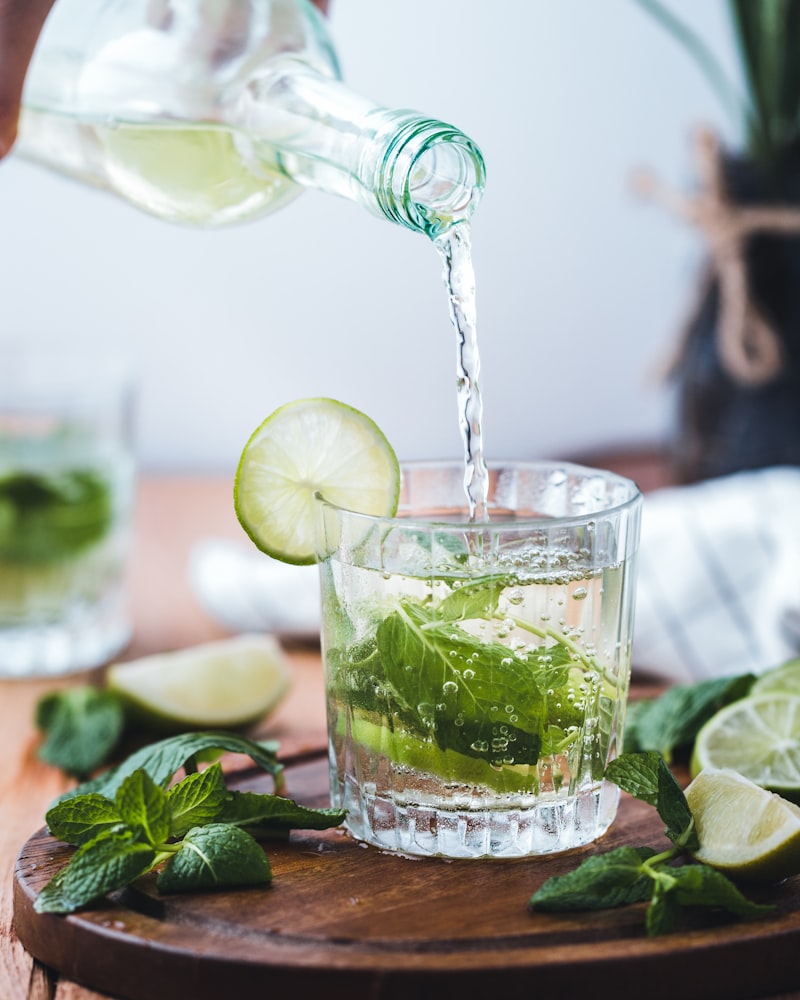
- THC seltzers and sparkling waters — The most popular format. Carbonated, lightly flavored, and typically dosed at 2.5 to 10 mg THC per can.
- Cannabis sodas — Sweetened, flavored beverages similar to traditional soft drinks. Usually 5 to 10 mg THC.
- Infused teas and coffees — Hot or cold beverages infused with THC, CBD, or both. Popular for daytime or relaxation use.
- Cannabis mocktails and cocktail replacements — Designed to mimic the social experience of cocktails without alcohol. Often include botanicals, bitters, and sophisticated flavor profiles.
- Non-alcoholic beer alternatives — Brands like Lagunitas Hi-Fi Hops produce cannabis-infused beverages modeled after craft beer.
- Cannabis-infused water — Flavorless THC-infused water using nano-emulsion technology. Typically low-dose (2.5 to 5 mg).
The Market Explosion
Cannabis beverages are the fastest-growing product category in the legal cannabis market, with some markets seeing 15% or higher year-over-year growth. While beverages still represent a relatively small share of total cannabis sales (roughly 3 to 5% in most markets), the trajectory is steep and accelerating.
Several factors are driving this growth:
- Social acceptability. Cracking open a THC seltzer at a party feels more normal to many people than pulling out a pipe or rolling a joint. The beverage format removes much of the social friction around cannabis use.
- Precise dosing. Each can or bottle contains a known, consistent amount of THC. This is far more predictable than estimating how many milligrams are in a puff of flower.
- Faster onset. Thanks to nano-emulsion technology (explained below), cannabis beverages kick in within 15 to 30 minutes — much faster than traditional edibles, which can take 1 to 2 hours.
- The "California sober" movement. A growing cultural shift toward replacing alcohol with cannabis, driven by younger demographics increasingly wary of alcohol's health effects.
- Better products. Early cannabis beverages were poorly made, with gritty texture and unpleasant cannabis flavors. Modern nano-emulsion technology has solved these problems.
Dosing: How Cannabis Beverages Compare
| Dose Range | Experience Level | Comparable To | Notes |
|---|---|---|---|
| 2.5 mg THC | Microdose / beginner | About half a light beer's relaxation | Subtle mood lift; most people remain fully functional. Ideal starting point. |
| 5 mg THC | Standard dose | Roughly one glass of wine's relaxation | Noticeable effects for most people; mild euphoria and relaxation. The most common beverage dose. |
| 10 mg THC | Experienced user | Two to three drinks' impairment | Full psychoactive effects. Too much for most beginners. Do not drive. |
Onset time: 15 to 30 minutes for nano-emulsion beverages, compared to 30 minutes to 2 hours for traditional edibles. This faster onset is one of the key advantages — you get feedback on how the dose is affecting you much sooner, which makes it easier to decide whether to have a second drink.
Duration: Typically 2 to 4 hours, shorter than traditional edibles (4 to 8 hours). This makes the experience more manageable and predictable — closer to the timeline of alcohol than to a standard edible experience.
Nano-Emulsion Technology: Why Cannabis Beverages Work Differently
THC is not water-soluble. If you simply add cannabis oil to water, it separates, clumps, and absorbs poorly. This was the problem with early cannabis beverages — they were inconsistent, slow-acting, and often unpleasant.
Nano-emulsion solves this by breaking THC oil into extremely tiny particles (typically 10 to 100 nanometers) and coating them with a surfactant that allows them to stay suspended in liquid. Think of it like how milk keeps fat droplets evenly distributed in water.
This matters for two reasons:
- Faster absorption. The tiny particle size means THC is absorbed more quickly through the mucous membranes of your mouth and stomach lining, partially bypassing the slower digestive route that traditional edibles take. This is why onset is 15 to 30 minutes instead of 1 to 2 hours.
- More consistent effects. Because the THC is evenly distributed throughout the liquid, each sip contains a proportional dose. Traditional edibles can have uneven cannabinoid distribution (one gummy in the batch might be stronger than another).
How Cannabis Beverages Compare to Alcohol
This comparison is driving much of the consumer interest. Here is an honest side-by-side:
| Factor | Cannabis Beverages | Alcohol |
|---|---|---|
| Calories | Typically 0–30 calories per can | 100–250+ calories per drink |
| Hangover | No hangover (some report mild grogginess at high doses) | Hangover is dose-dependent and common |
| Liver damage | No known liver toxicity from THC | Alcohol is directly toxic to liver cells |
| Impairment | Affects coordination, reaction time, judgment, and perception | Affects coordination, reaction time, judgment, and inhibition |
| Addiction potential | ~9% of regular users develop cannabis use disorder | ~15% of regular drinkers develop alcohol use disorder |
| Overdose risk | Cannabis overdose is extremely uncomfortable but not fatal | Alcohol overdose (poisoning) can be fatal |
| Driving impairment | Yes — do not drive after consuming | Yes — do not drive after consuming |
An important caveat: Cannabis beverages are not "safe" in the way that a non-alcoholic beverage is safe. They still cause impairment. They can still lead to overconsumption if you are not paying attention. They can interact with medications. And they carry a real, if lower, risk of dependence. The comparison to alcohol is favorable in many respects, but it is not a free pass.
The "California Sober" Movement
"California sober" refers to the practice of abstaining from alcohol (and sometimes other substances) while continuing to use cannabis. The term gained mainstream visibility after Demi Lovato used it publicly, and it reflects a growing cultural shift — particularly among millennials and Gen Z — toward viewing cannabis as a healthier alternative to drinking.
Cannabis beverages are central to this movement because they offer a one-to-one social replacement. Instead of ordering a cocktail at a gathering, you open a THC seltzer. The ritual is similar. The social function is the same. But the pharmacological profile is different.
It is worth noting that "California sober" is not endorsed by the addiction recovery community, which generally defines sobriety as abstinence from all intoxicating substances. If you are in recovery from alcohol use disorder, consult your treatment team before substituting cannabis. See our Cannabis and Alcohol Use Disorder page for a nuanced discussion.
Popular Cannabis Beverage Brands
The market has exploded with options. Some widely available brands in legal states include:
- Cann — Low-dose social tonics (2 mg THC / 4 mg CBD per can). One of the most recognized brands in the category.
- WYNK — THC seltzers focused on the alcohol-alternative market. Multiple flavors, 2.5 or 5 mg THC options.
- Pabst Labs — Cannabis seltzers from the PBR brand family. 5 mg THC per can.
- Lagunitas Hi-Fi Hops — Cannabis-infused sparkling water from the craft brewery. Available in THC-only and THC:CBD blend options.
- Keef — Cannabis sodas in classic flavors. 10 mg THC per bottle (higher dose, suited for experienced users).
- Magic Number — Premium cannabis cocktails and seltzers. 3 to 5 mg THC per serving.
- Wyld — Known for edibles but expanding into beverages. Real fruit flavors, various dose options.
Product availability varies by state. These are only available at licensed dispensaries in states with legal recreational cannabis programs.
Legal Considerations
The legal landscape for cannabis beverages has a significant nuance worth understanding:
- Dispensary THC beverages are available only in states with legal recreational cannabis programs. They are sold at licensed dispensaries, taxed as cannabis products, and subject to state cannabis regulations including testing and labeling requirements.
- Hemp-derived THC beverages occupy a different legal space. The 2018 Farm Bill made hemp (cannabis with less than 0.3% delta-9-THC by dry weight) federally legal. Some companies have used this to produce beverages containing THC derived from hemp, sold outside the dispensary system in states without recreational cannabis. The legality of these products is actively debated and varies by state.
Notably, Minnesota legalized hemp-derived THC beverages before legalizing cannabis flower — creating a situation where you could buy a THC seltzer at a bar but not purchase cannabis at a dispensary. Minnesota's full recreational program launched in 2025, but the hemp-derived beverage market remains a distinct category.
How to Dose Responsibly
- Start with 2.5 mg THC. If you are new to cannabis or new to beverages, begin with the lowest available dose. Many brands sell 2.5 mg cans specifically for this purpose.
- Wait 30 minutes before having a second. Because nano-emulsion beverages absorb faster than traditional edibles, you should feel the effects within 15 to 30 minutes. Give the first drink time to fully take effect before deciding to have another.
- Do not mix with alcohol. Combining THC and alcohol significantly amplifies impairment, increases nausea risk, and makes the experience unpredictable. The entire point of cannabis beverages for many people is replacing alcohol, not stacking with it.
- Treat them with the same respect as alcoholic drinks. Do not drive. Do not make important decisions. Plan your evening around the 2 to 4 hour duration.
- Read the label carefully. Cans may contain 2.5 mg, 5 mg, or 10 mg. A 10 mg beverage is a very different experience from a 2.5 mg one. Some bottles contain multiple servings.
Nano-emulsion technology has been shown to increase oral bioavailability of cannabinoids by 3 to 5 times compared to oil-based formulations, with significantly faster onset of action. Research in <em>Pharmaceutics</em> confirmed that nano-emulsified cannabinoids reach peak blood levels in approximately 30 minutes, compared to 90+ minutes for standard oil-based products.
Nakano et al. — Nano-emulsion-based delivery systems for cannabinoids, Pharmaceutics, 2023
For support with quitting or cutting back on cannabis, visit our companion site CannabisDependence.org